
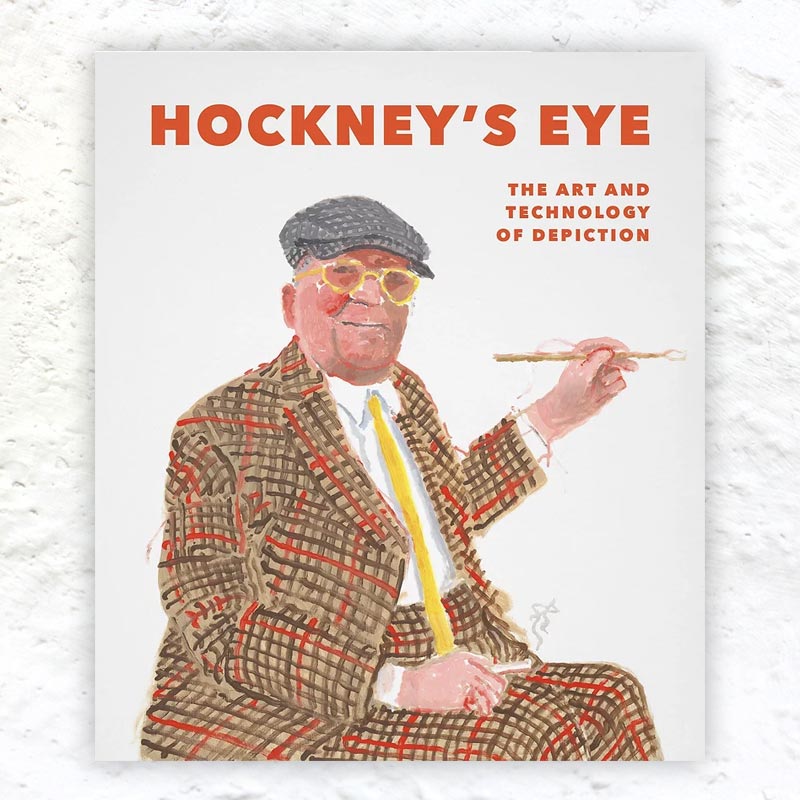

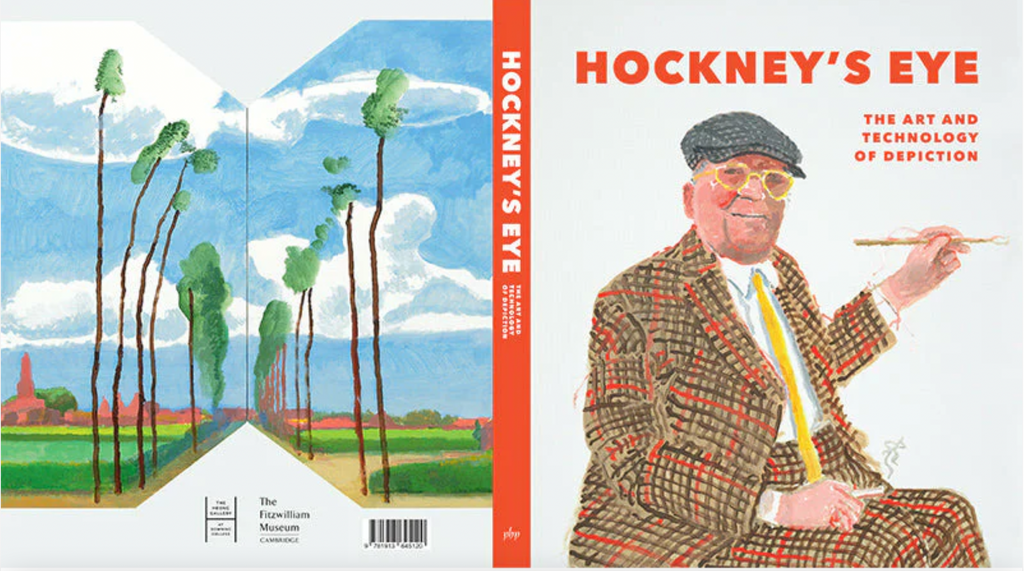

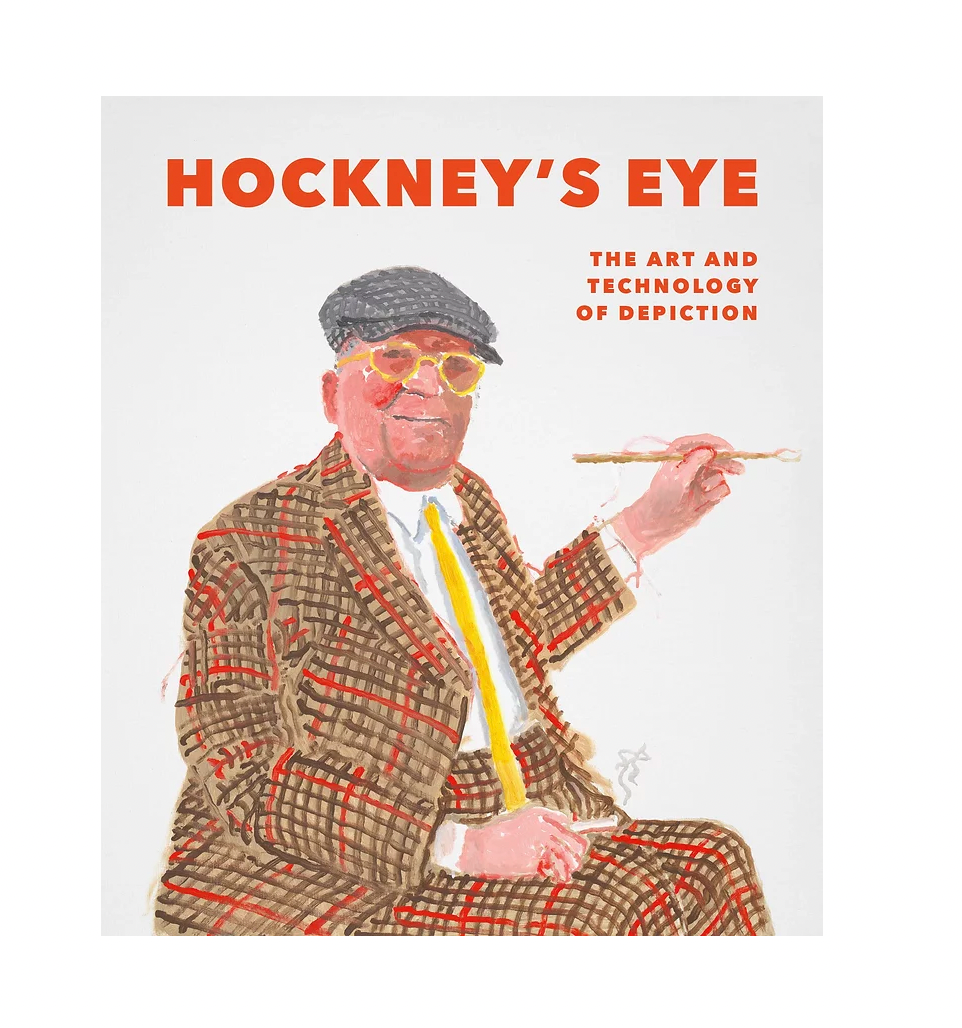
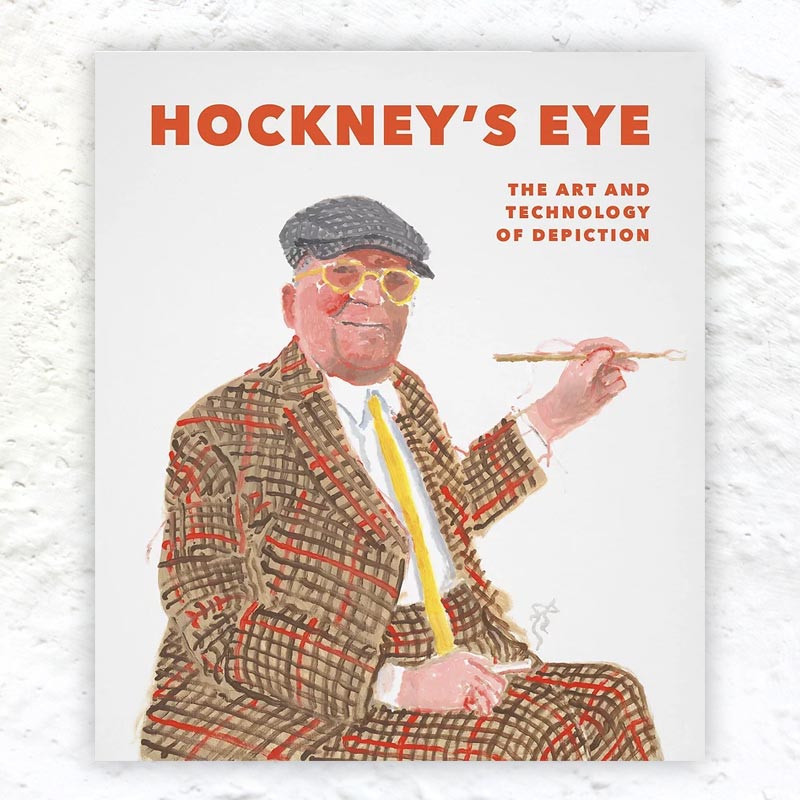
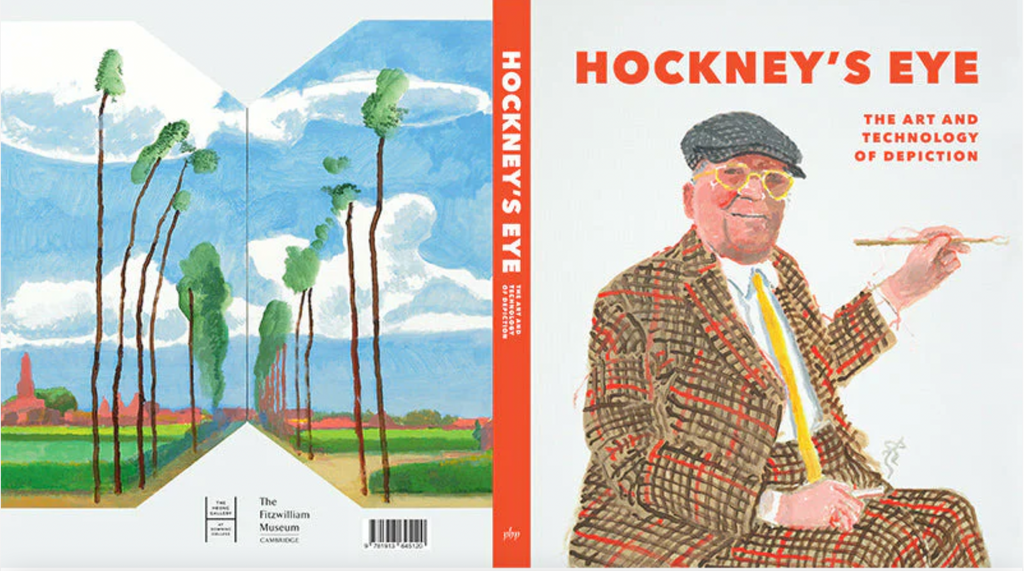
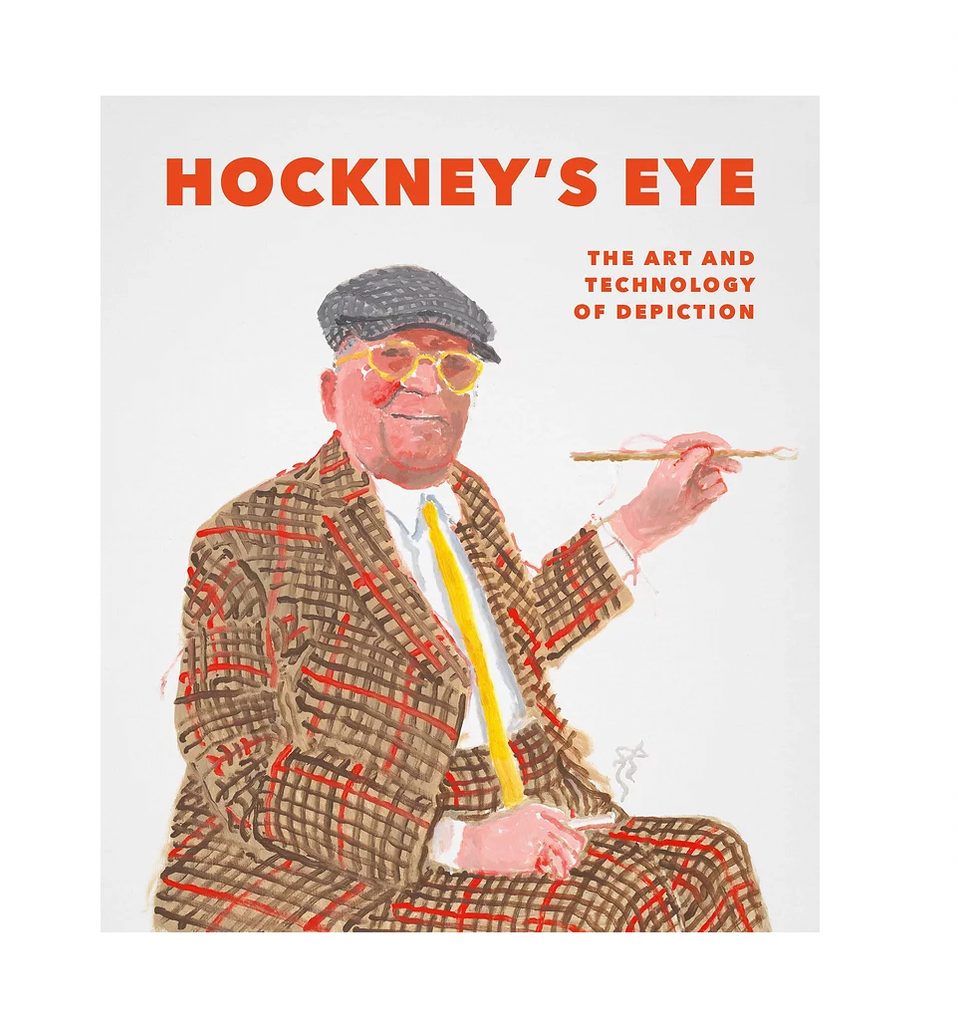
Hockney's Eye: The Art and Technology of Depiction (1st edition hardcover exhibition catalogue)
£39.00
This vibrant catalogue, published in 2022, accompanied a major Hockney exhibition at the The Fitzwilliam Museum and the Heong Gallery in Cambridge, as well as the Teylers Museum in Haarlem, Netherlands.
Throughout his long career, David Hockney insistently explored diverse ways of depicting the visible world. He scrutinised the methods of the old masters, and explored radical departures from their cherished assumptions. The exhibitions accompanied by this volume are the first to focus on this central theme in his art. 'Western art' from the Renaissance until at least the late 19th century has been dominated by the depiction of nature. Was this to be accomplished by direct looking (called “eyeballing” by Hockney) or with the assistance of optical theory and devices, such as cameras, Hockney experimented with the full range of existing strategies, overtly using perspective in some of his classic pictures and rigorously investigating optical aids for the imitation of nature, including the camera obscura and camera lucida.
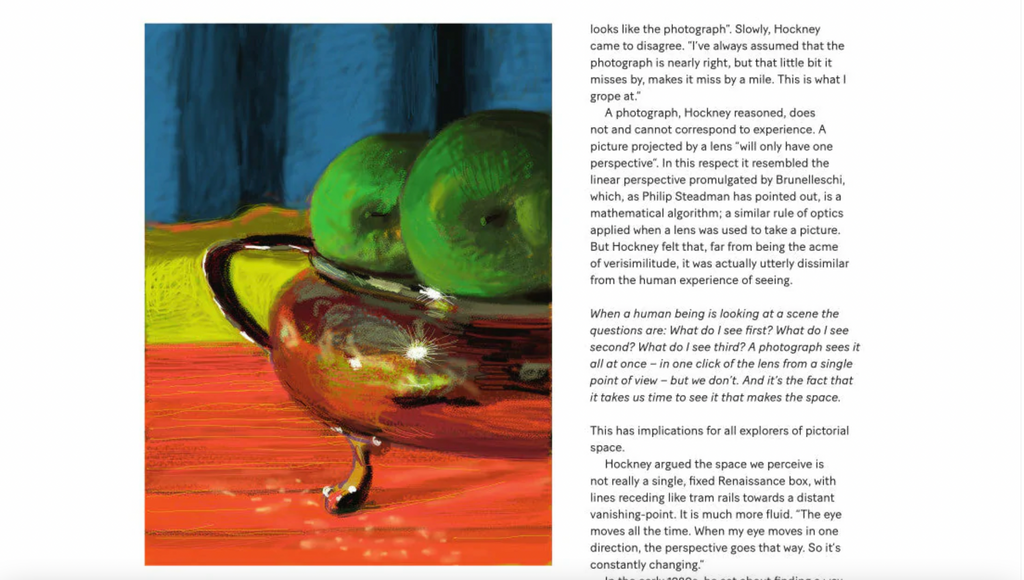
Yet he came to reject the photograph as the definitive image of what we see. Along the way, he identified a 'camera culture' in European painting from 1400, arguing very controversially that the supreme naturalism of painters like Jan van Eyck are the product of optical devices. His book, Secret Knowledge (2001), with its majestic panorama of paintings over the course of five centuries, claimed that art historians have missed the central aspect of painters’ practice. The 'Hockney thesis' has been received more favourably outside the professional world of art history than in it.
His own artistic practice was in vigorous dialogue with his radical thesis, and he progressively demonstrated new and dynamic ways of characterising the visual world without perspective and other conventional techniques.
The first section of the book looks at his thrilling experiments in seeing and representing in broad historical and contemporary contexts. This is followed by discussions of pre-photographic devices for capturing the appearances of things by optical means. The third section includes essays on Hockney’s experiments from the perspectives of neuroscience and computer vision. In short, it reveals in a new way the working of Hockney’s unique eye.
- Publisher : Paul Holberton Publishing; 1st edition (5 April 2022)
- Language : English
- Hardcover : 184 pages
- Dimensions : 24.13 x 2.03 x 27.94 cm


